Cold chain packaging and testing, in one place
Keeping a temperature-sensitive product stable from the factory to its final destination is hard, and proving it stayed stable is harder. TempAid runs an ISTA-certified lab and a full set of packaging and testing services to do both: design the packout, test it against real distribution conditions, and hand you the documentation that stands up to an audit.
Here is what we offer and what each service is actually for.
Lab and testing services
Our lab is built around thermal testing and package validation. We simulate real transport and storage conditions, then give you the data to optimize a packaging system rather than guess at it, from temperature mapping and environmental testing to specific-heat measurement and R-value analysis. Testing runs from controlled chambers through to ISTA distribution testing and accelerated aging, so you see how a package performs over time, not just on day one.
Temperature and environmental package testing
This is where we confirm a packaging system holds up across the conditions it will actually face. Core evaluations:
- Thermal packaging design: building packout systems that protect the payload and meet efficacy and safety standards.
- Temperature mapping: confirming the product stays inside its required range so you avoid excursions and spoilage.
- Environmental stress testing: exposing packages to temperature extremes, vibration, and shock to check durability and stability.
Package validation testing
Validation proves the packaging keeps its integrity through the whole distribution journey. We run temperature mapping and thermal performance tests to check the system holds its range, plus drop and vibration tests for the physical stresses of transit. Each test is set up to replicate a specific real scenario. Components include:
- Process validation: confirming equipment such as sealing and forming machines runs consistently.
- Transit testing: simulating handling and transport stresses to check the package keeps its integrity.
- Accelerated age testing: assessing long-term reliability by simulating aging.
We pull data from ISTA protocols, third-party studies, and customer feedback so packaging designs improve on evidence, not assumption.
Walk-in temperature chamber testing
Our walk-in chambers reproduce ambient, refrigerated, and frozen conditions in a controlled space, so we can see how a packaging solution behaves across temperature and humidity levels and get consistent, repeatable results. The chambers are set up to support 21 CFR Part 11 compliance, which matters for regulatory adherence, and the testing feeds into the wider validation work rather than sitting on its own. The result is data you can point to when you make a packaging decision.
Mechanical and physical package testing
R-value testing
We measure how well a packaging system resists heat transfer by exposing it to controlled temperature variations and calculating its thermal resistance. That tells us how effective a cooler or insulated container really is, and which materials to choose.
Specific heat measurement
Using the ASTM C1784 method, we measure how much heat energy is needed to change a material's temperature. Knowing that helps predict temperature stability and plan around thermal excursions.
ISTA distribution testing
Shipping exposes a package to shock, vibration, and compression. Our ISTA distribution testing, run with Orora's lab, simulates those conditions so packaging decisions are backed by real data.
Primary package testing
Seals and leaks lead to contamination and product loss. We run seal-pull and leak testing to ASTM-based SOPs to catch those weak points before they become a problem.
Accelerated aging testing
By simulating long-term aging, we show how packaging performs over its shelf life, so you can adjust storage and handling before it matters.
Temperature mapping and validation
We map temperature variation across shipping lanes, warehouses, freezers, trucks, and other equipment to find and fix risks across the supply chain. Services include:
- Shipping lane mapping: choosing routes and transport modes that hold the required temperature range.
- Warehouse mapping: finding hot and cold spots in storage to support compliance and cut spoilage.
- Freezer, truck, and equipment mapping: confirming temperature control in confined spaces.
Alongside mapping we provide documentation and compliance reports aligned with industry standards, and work with each client to tailor the approach to their lanes and products.
Gel pack conditioning studies
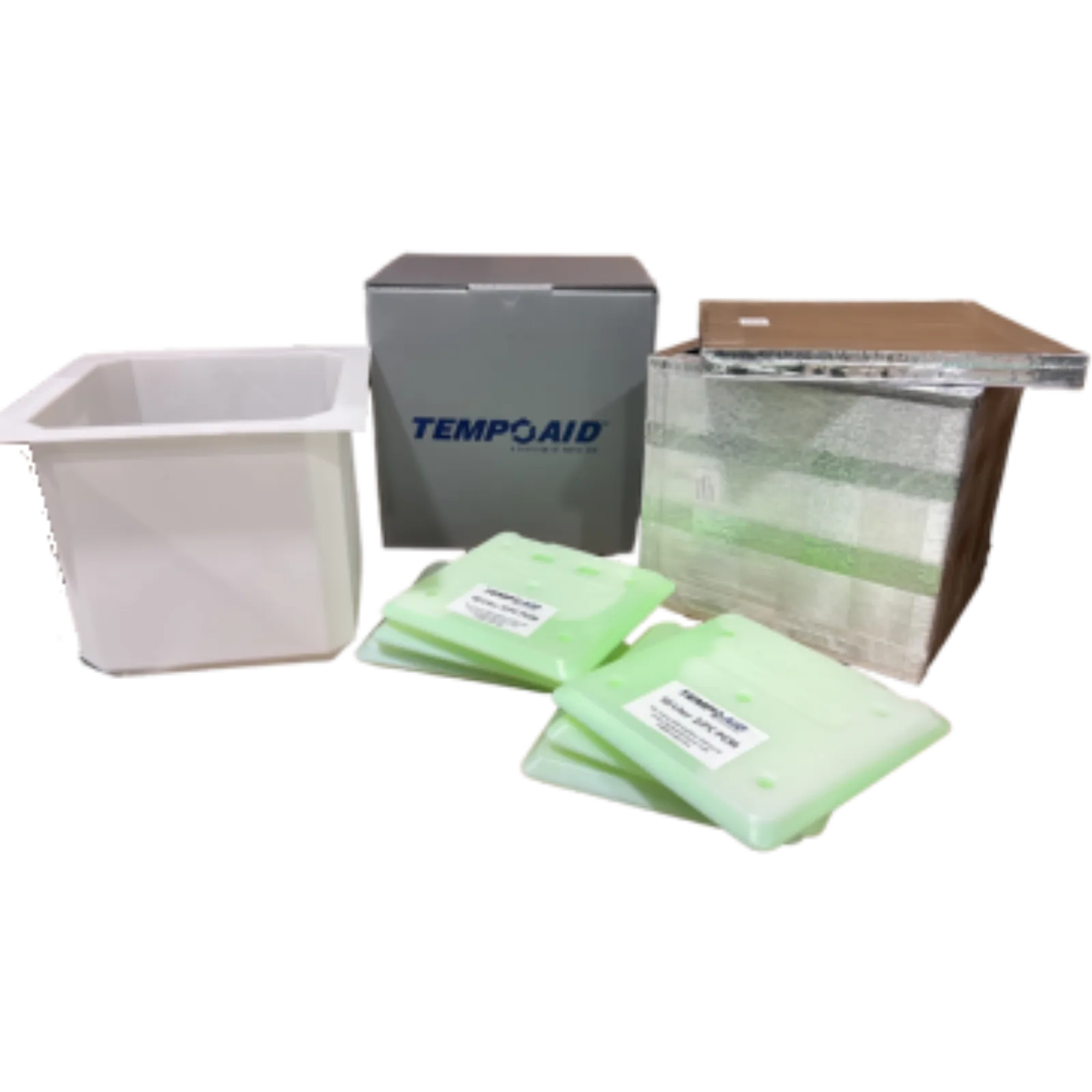
Gel pack conditioning studies check how gel packs perform when pre-conditioned to specific temperatures in controlled chambers. We track how long they hold the target range inside insulated packaging, which lets us match the right gel pack configuration to a shipment, reduce spoilage risk, and keep logistics costs down. The findings feed back into temperature mapping and validation so packouts keep improving.
Documentation and design support
Precision and compliance are non-negotiable in pharma, so we back the physical work with documentation. We run Cold Chain Best Practice GAP analyses, comparing your packaging process against industry standards to find where to improve, and produce validation reports and Standard Operating Procedures (SOPs) covering transport and storage.
We also handle custom package design and thermal modeling, predicting how a packout will perform in real conditions so we can design out excursion risk before production. The aim throughout is simple: packaging that is stable, documented, and ready for an audit.