Global demand for strict temperature control in pharmaceutical shipping has risen dramatically, with many products requiring temperatures as low as -25°C or even -80°C. Historically, these shipments relied on EPS foam coolers (commonly referred to as “Styrofoam”) filled with dry ice. While that method effectively keeps shipments frozen, it carries ongoing costs, demanding regulations, and specialized training for both shippers and recipients.
This article explores how Vacuum Insulated Panels (VIPs), combined with -21°C Phase Change Materials (PCMs) and smaller amounts of dry ice when needed, are transforming sub-zero shipping in the pharmaceutical industry. We compare a typical EPS “Styrofoam” cooler with a modern VIP alternative, revealing why so many pharmaceutical distributors are making the switch for both -15°C to -25°C frozen and -60°C to -80°C ultra-low shipments.
1. THE LEGACY APPROACH: EPS FOAM + DRY ICE
EPS Foam (Styrofoam)
EPS (expanded polystyrene), often called “Styrofoam”, is lightweight but only moderately insulative (an “R-value” of about 4).
What is an R-value?In simple terms, R-value measures how well a material resists heat flow. The higher the number, the better it insulates. Because EPS foam has a relatively low R-value, it needs a lot of refrigerant (like dry ice) to keep products cold for multiple days.
Dry Ice
Frozen carbon dioxide at around -78.5°C can maintain product temperatures from -25°C down to -60°C or even -78°C for several days. However, it is regulated as a Class 9 hazardous material (UN 1845), which entails:
- Extra Labeling & Fees: Shippers often pay $5, $35 per package for “Dangerous Goods” handling.
- Tight Payload Space: Large amounts of dry ice leave limited room for actual pharmaceuticals inside the coolers.
- Disposal Challenges: Recipients must “air out” leftover dry ice in a well-ventilated area. Foam coolers typically end up in landfills, raising sustainability concerns.
- Specialized Training: Both shipping and receiving personnel need proper handling knowledge. Improper handling can lead to frostbite, CO₂ buildup in enclosed spaces, or incorrect labeling that causes shipments to be rejected, resulting in product spoilage.
With growing environmental pressures and costs, many shippers find that EPS + dry ice becomes expensive and cumbersome, especially when scaling up to hundreds or thousands of shipments each month.
2. WHAT MAKES VIP + PCM DIFFERENT?
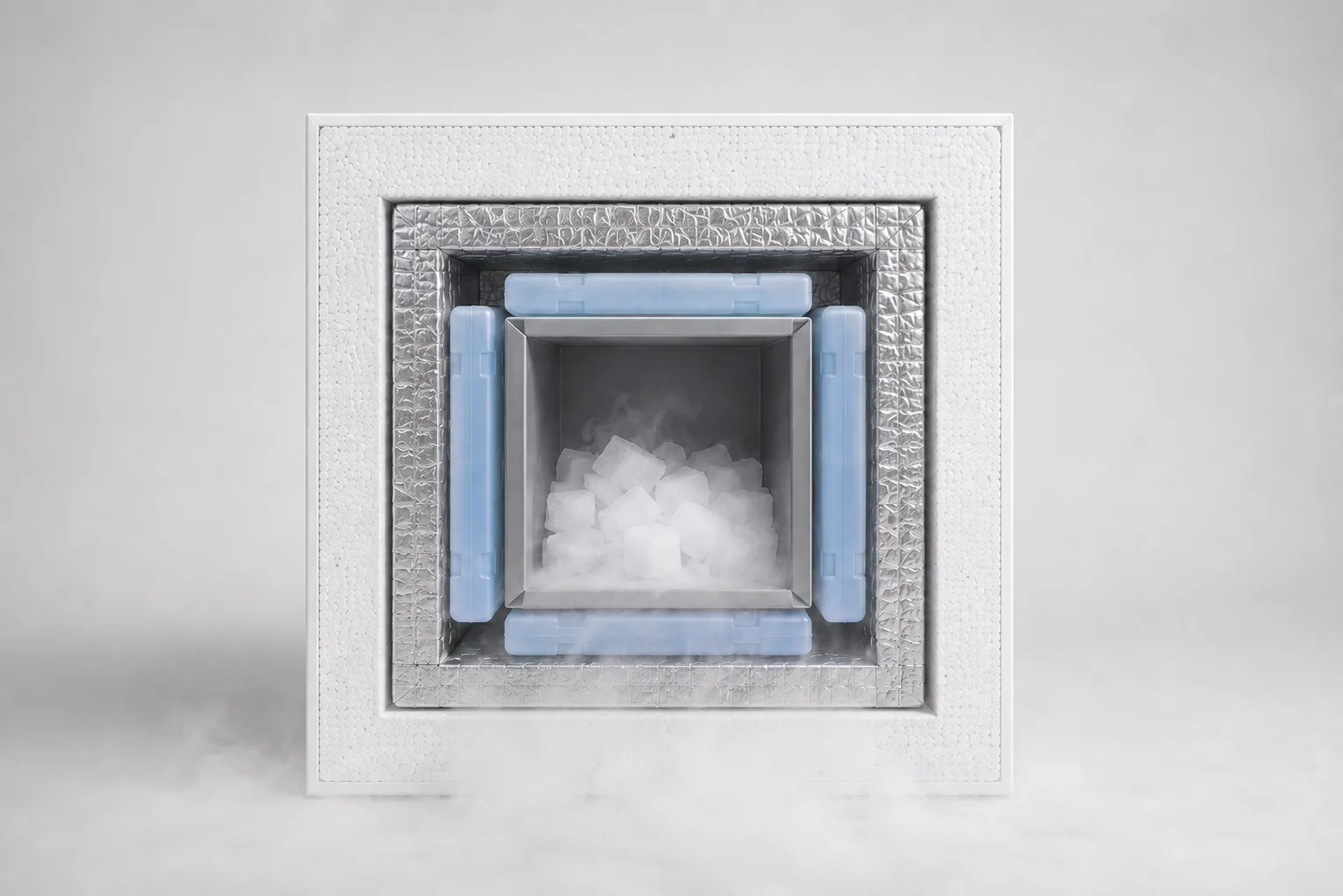
Vacuum Insulated Panels (VIPs): The Alternative to EPS “Styrofoam”
- High R-Value: VIPs typically have an R-value around 40-5 to 10 times the insulation performance of Styrofoam. This superior insulation means you need less refrigerant to maintain sub-zero temperatures.
- Compact Design: Because of their high insulation value, VIP boxes can be smaller on the outside and provide more internal payload space for the pharmaceutical product.
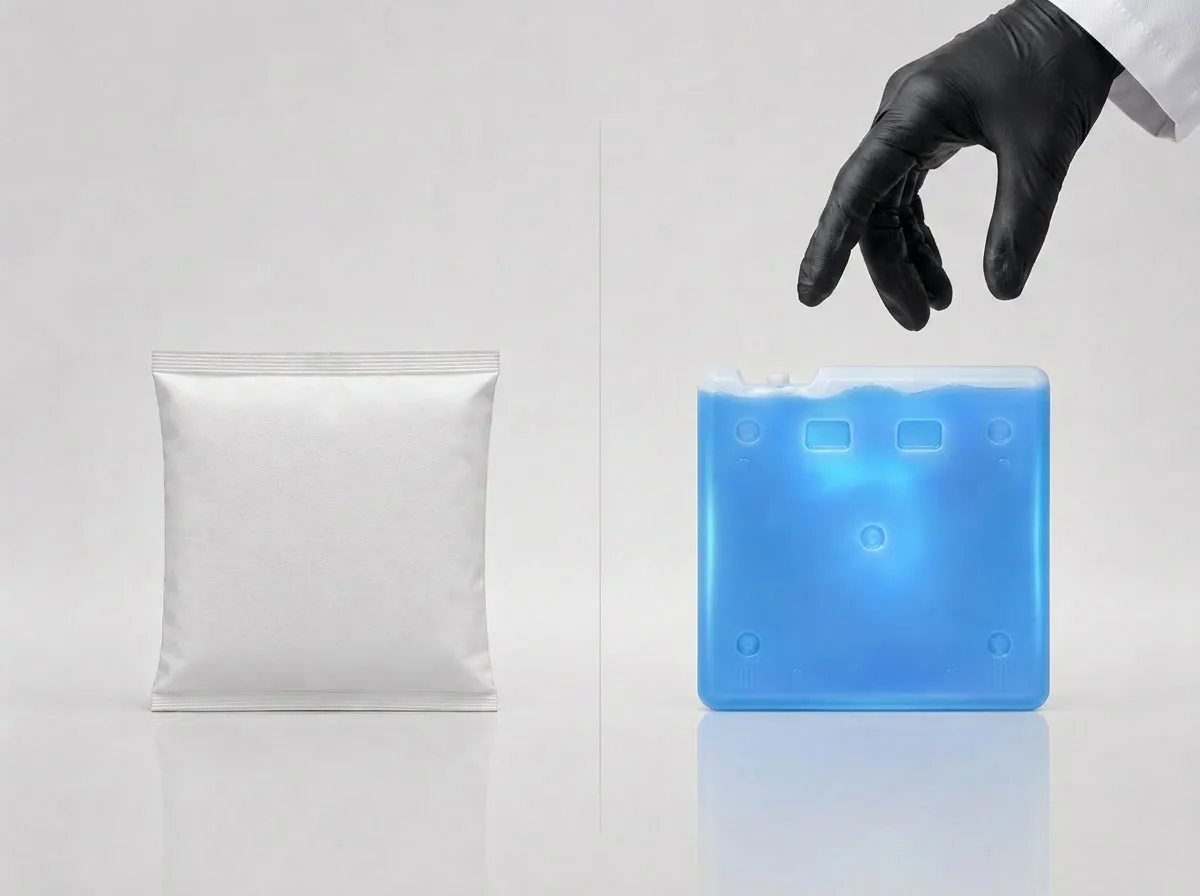
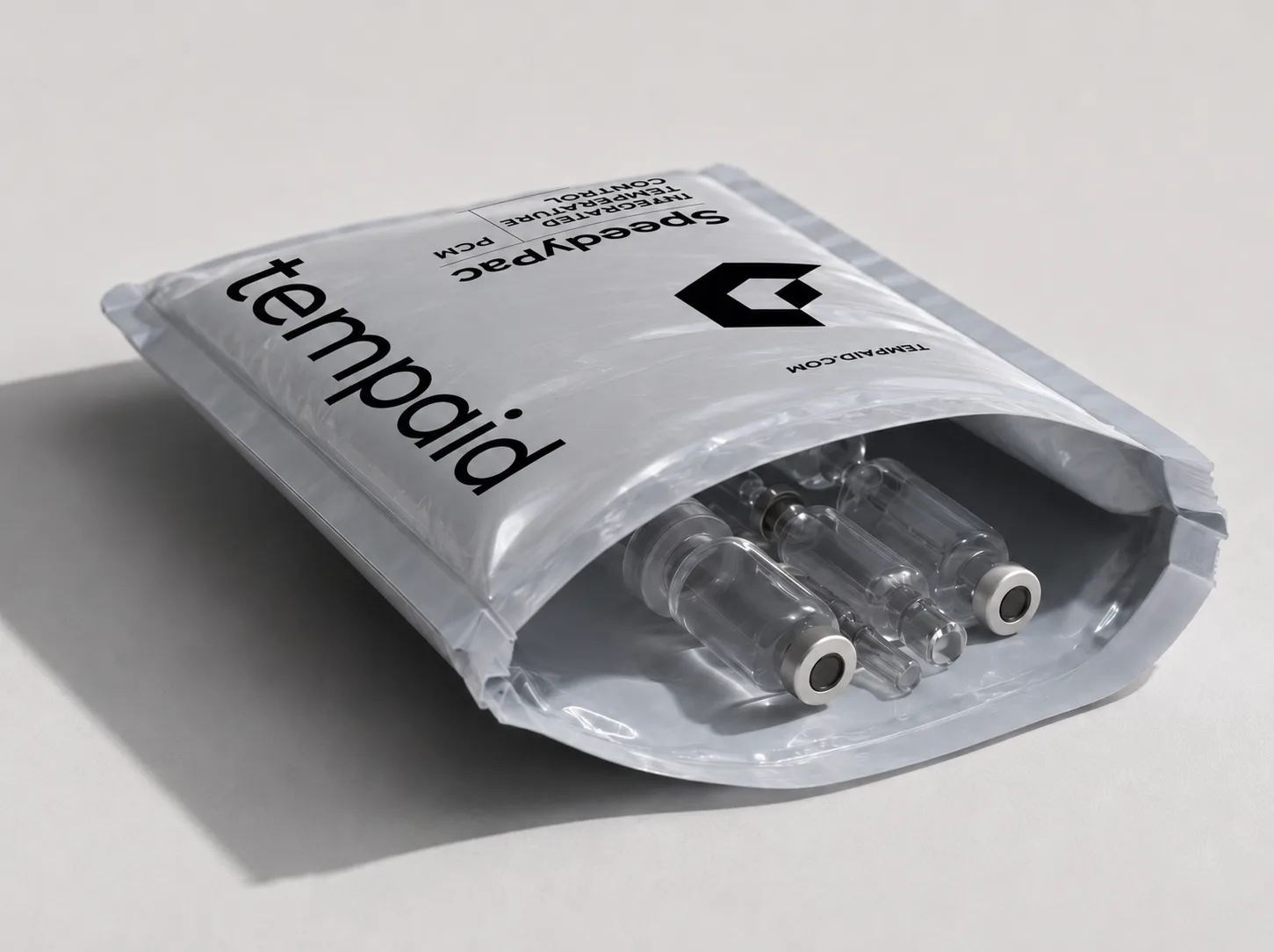
-21°C Phase Change Material (PCM): The Alternative Refrigerant to Dry Ice
- Non-Hazardous: PCM “plates” freeze at about -21°C, then hold the payload near that temperature for 60-100+ hours (depending on the configuration).
- Reusable & Stable: PCMs do not sublimate. If a shipment is delayed, the plates remain solid on standby in your freezer, no “topping up” or adding extra is necessary.
- No DG Fees: Since PCMs are not classified as dangerous goods, you avoid extra labeling and surcharges.
3. TWO USE CASES: FROZEN (-15°C TO -25°C) AND ULTRA-LOW (-60°C TO -80°C)
A) Frozen Range: -15°C to -25°C
Using -21°C PCM plates in a VIP box lets shippers replace dry ice entirely. You avoid hazardous-goods labeling, specialized staff training, and ongoing dry ice purchases. You also gain more internal space in the cooler for your product.
B) Ultra-Low Range: -60°C to -80°C
Even at these extreme low temperatures, VIPs still help. For instance, instead of 10-12 lb of dry ice in EPS foam coolers, you might need only 3-5 lb in a VIP. That saves:
- Hazardous Fees (some carriers charge more based on dry ice weight)
- Shipping Weight (less overall mass)
- Operational Complexity (less ice to handle, fewer melting concerns)
In short, healthcare organizations see VIPs as a single, flexible packaging system that can handle everything from 2-8°C (cold chain), 15-25°C (ambient), -15 to -25°C (frozen), and -60°C to -80°C (ultra-low), simply by switching out refrigerants.
4. CASE STUDY COMPARISON: EPS WITH DRY ICE VS. VIP WITH PCM
Scenario: Shipping 500 Coolers Per Month at -15 to -25°C
We compare:
1. TempAid EarthWise 050 EPS Cooler + Dry Ice
- External volume: ~1.19 cubic feet
- Internal volume (empty): ~4.6 L
- Typically needs 6-7 lb of dry ice for ~62 hours at -25°C
- Leaves only ~1.3 L for product after adding dry ice
- Must carry a “UN 1845 Dry Ice” label and incur DG fees
- Single-use foam frequently goes to landfill
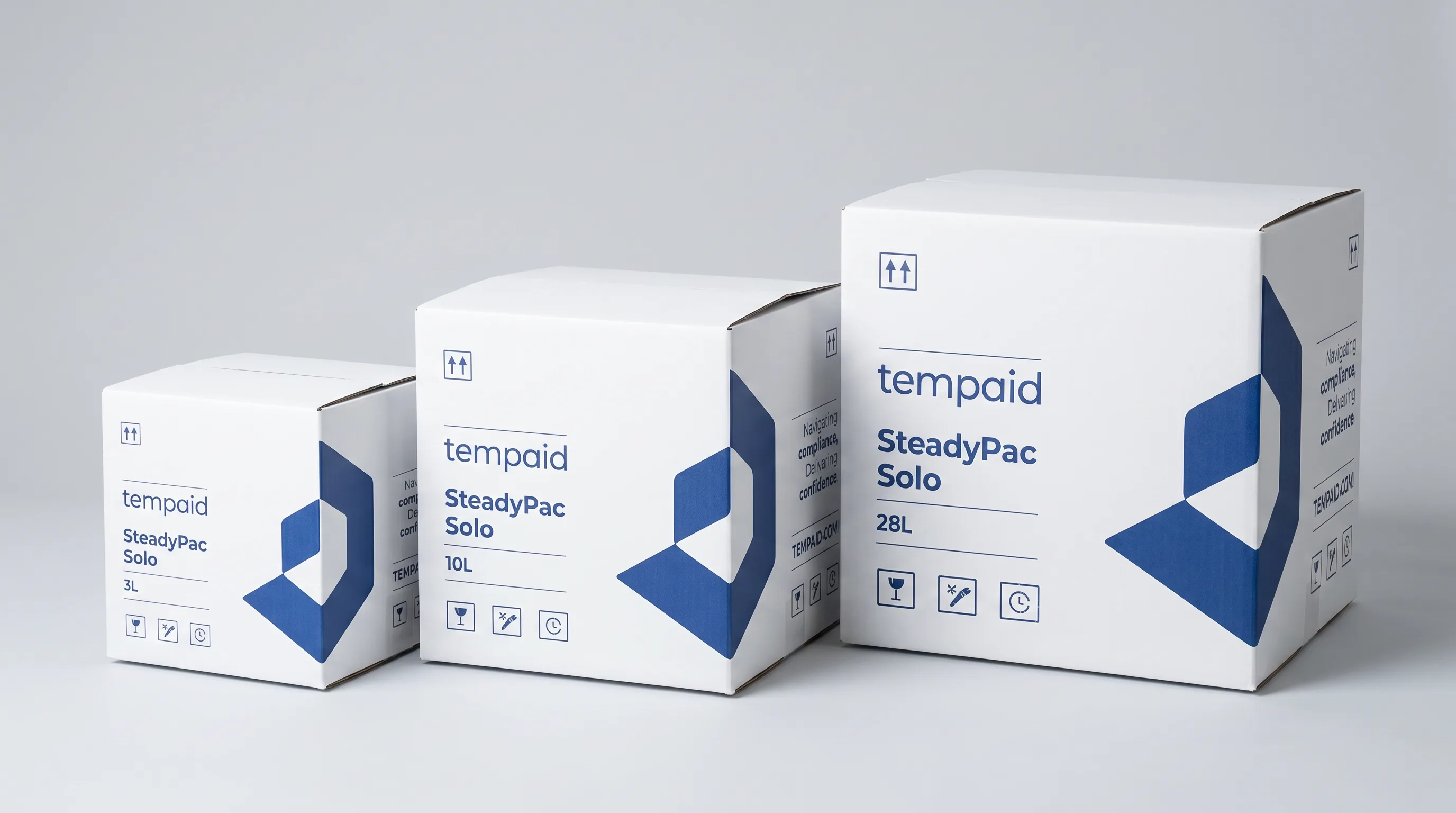
2. TempAid SteadyPac 3L VIP + -21°C PCM
- External volume: ~0.78 cubic feet
- Internal volume (empty): ~5.9 L
- Approx. 3 L of product space (when PCM is loaded)
- No hazardous labels or DG fees (PCM is not a regulated material)
- Reusable for up to 5 years, significantly cutting waste
- No leftover CO₂ or specialized disposal
Result: Although the 050 EarthWise EPS foam cooler is larger overall, its actual payload space shrinks drastically once the required dry ice amount is added. The 3L SteadyPac VIP offers about twice or triple the usable capacity, requires no DG fees, and is more straightforward to use and reuse.
5. COST ANALYSIS: 500 SHIPMENTS PER MONTH AT -25°C
EPS 050 + ~7 lb Dry Ice
- Dry Ice Cost: $0.34/lb × 7 lb = $2.38/shipment
- DG Fee: $5 (conservative) per shipment
- Totals at 500 shipments/month
- Dry Ice: 500 × 2.38 = $1,190/month → $14,280/year
- DG Fees: 500 × $5 = $2,500/month → $30,000/year
- Combined: $44,280+ per year (excluding foam disposal or labor)
SteadyPac 3L VIP + PCM
- Dry Ice: $0 (none required at -25°C)
- DG Fees: $0 (no hazardous classification)
- Reusable: The VIP container and PCM plates can last 5 years, aside from minimal energy to refreeze plates.
- Potential Savings: $44,000+ annually at 500 shipments/month, ignoring additional benefits like simpler packouts, less waste, or an eco-friendly brand image.
6. WHAT ABOUT ULTRA-LOW (-60°C TO -80°C)?
Using the same EarthWise 050 EPS cooler for ultra-low shipping:
- Requires about 10-12 lb of dry ice for ~60+ hours at -60°C to -80°C
- Leaves negligible or no room for product once the ice is inside
By contrast, the SteadyPac 3L VIP cube uses roughly 6-8 lb of dry ice for a similar performance time as the EarthWise 050 EPS cooler, cutting:
- DG Fees (some carriers charge per pound of ice)
- Shipping Weight (less overall mass)
- Disposal (fewer ice top-offs, simpler returns)
The same VIP cooler design that utilizes PCM at -25°C can shift to partial dry ice for -60°C to -80°C shipments. One VIP cooler solution can address multiple temperature ranges in a pharmaceutical shipper’s portfolio.
7. ENVIRONMENTAL IMPACT & REUSABILITY
- Styrofoam Disposal: EPS foam coolers are usually single-use, persisting in landfills for centuries.
- Dry Ice Sublimation: Produces continuous CO₂ emissions.
- VIP Reuse: Many VIP shells function for 5+ years, greatly reducing waste.
- PCM Plates: Re-frozen and re-used indefinitely, adding only negligible physical waste.
For example, a single SteadyPac 3L VIP cooler can be reused for hundreds of shipments annually, saving enormous amounts of EPS foam from landfills and avoiding thousands of pounds of CO₂ from dry ice sublimation.
8. CONCLUSION: A SMARTER PATH FOR PHARMA SHIPPING
EPS “Styrofoam” coolers plus dry ice once dominated both frozen and ultra-low shipping. But with mounting dry ice expenses, Class 9 labeling, large EPS foam volumes, and heightened sustainability pressures, many pharmaceutical shippers now see these “legacy” methods as unsustainable.
VIP + PCM solutions offer a modern alternative:
- At -15 to -25°C: Use -21°C PCM to eliminate dry ice, cutting DG fees to zero and simplifying packouts.
- At -60 to -80°C: Use far less dry ice in the same VIP, lowering shipping weight, partial DG surcharges, and leftover disposal.
- Versatility: A single VIP cooler system can handle multiple temperature targets by swapping refrigerants.
With thousands of dollars saved in assessorial charges, reduced dry ice replenishment needs, and a major drop in Styrofoam waste, there has never been a better time to explore VIP-based shipping. From cost savings and sustainability to simplified handling and consistent temperature control, VIP solutions are helping the pharmaceutical industry embrace a cleaner, leaner, and more future-ready cold chain.
END OF WHITE PAPERNote: All cost figures are illustrative, based on typical market rates. Real savings vary by shipment volume, route, and carrier. Always perform operational qualifications (OQ/PQ) to confirm performance before adopting new methods.