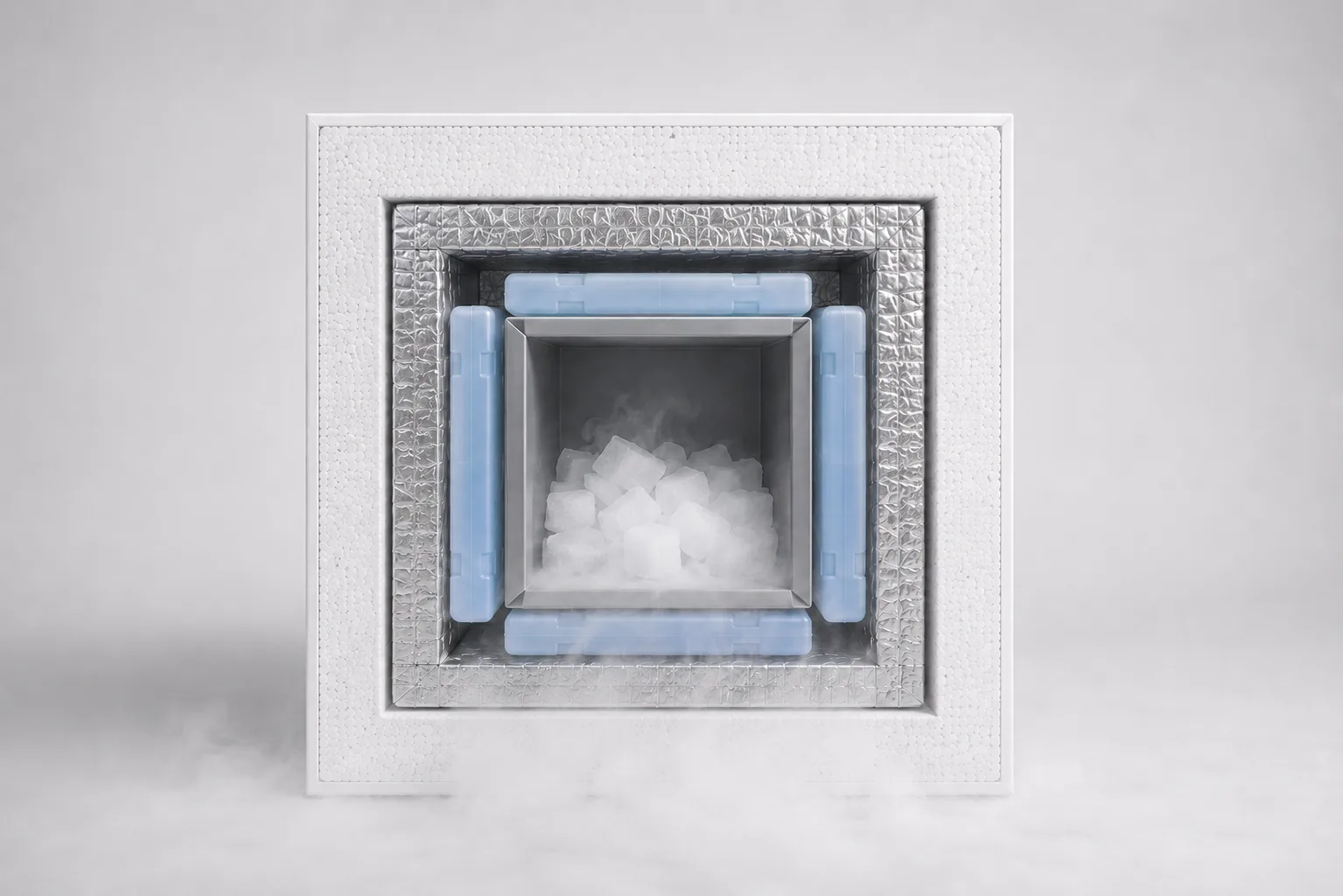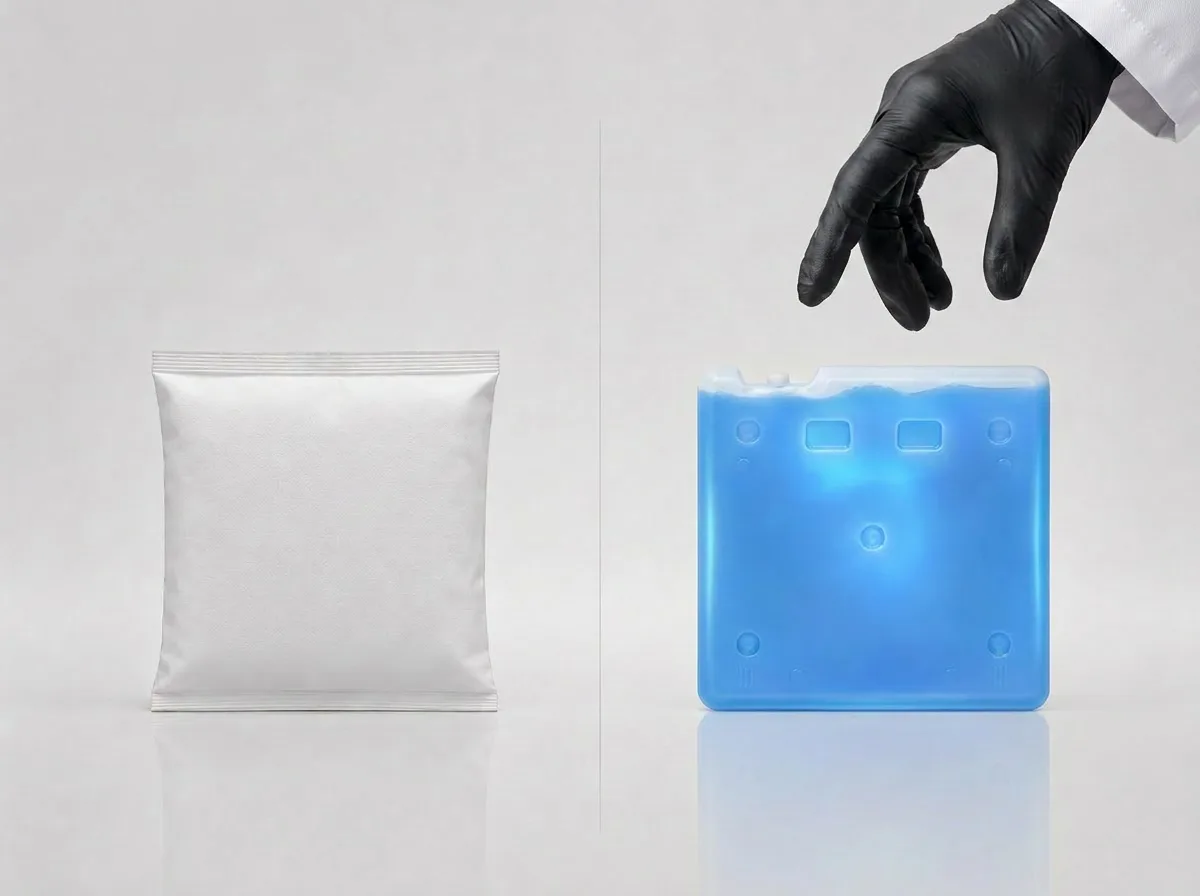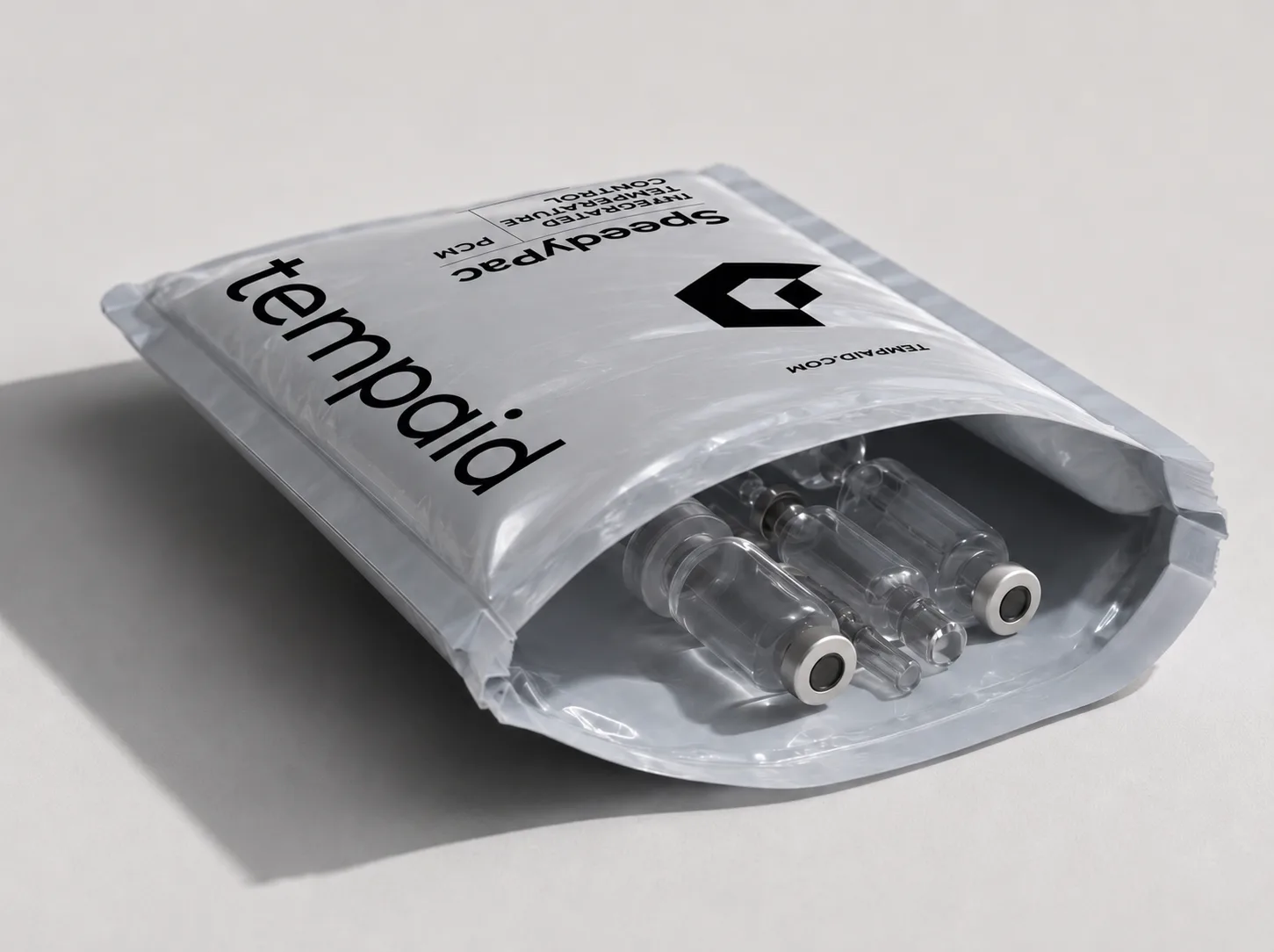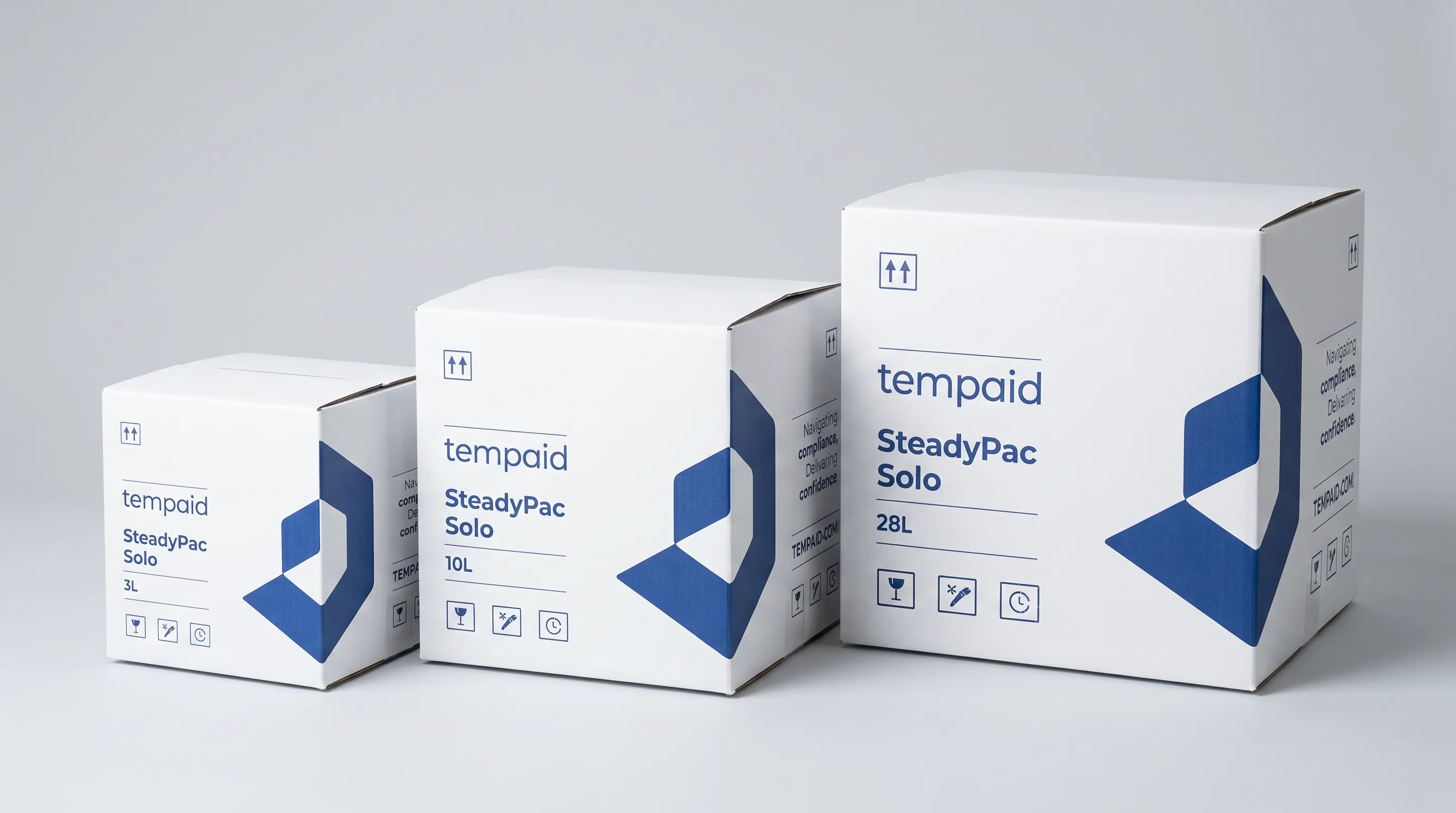
Most pharmaceutical companies are bleeding money on shipping costs they don't understand. The issue isn't thermal performance. It's how refrigerant and insulation choices create exponential shipping penalties through dimensional weight.
Companies implementing billable weight optimization report 20-50% cost savings per shipment with some achieving over 50% savings per box¹. The pharmaceutical cold chain packaging market projects growth to $32-39 billion by 2030-2035², yet most teams are leaving shipping efficiency on the table because they're optimizing for the wrong metrics.
What Is Billable Weight?
Billable Weight = whichever is HIGHER:
- Actual Weight (container + refrigerant + product)
- Dimensional Weight (Length × Width × Height ÷ 139)
You pay for whichever number is bigger.
The 139 divisor represents cubic inches per pound that carriers consider optimal truck density. FedEx and UPS lowered this from 166 to 139 in recent years because they concluded shippers weren't being considerate enough with packaging sizes³. The lower the divisor, the higher your dimensional weight penalty. It's their way of incentivizing you to use smaller packaging or pay more for wasted truck space.
However, the 139 divisor is negotiable depending on your shipping volume. High-volume commercial customers can negotiate dimensional divisors up to 200, meaning significantly lower dimensional weight penalties. Retail customers typically get stuck with 139-166, while enterprise accounts with serious volume can reach up to 200⁴.
All carriers (FedEx, UPS, DHL) now round UP every dimension to the next whole inch before calculating dimensional weight⁵. This change alone increases shipping costs 6-20%⁶.
Short to medium duration packages typically bill on dimensional weight because they're large but light. Extended duration systems typically bill on actual weight due to greater refrigerant mass required. Short shipments = paying for air space, long shipments = paying for refrigerant mass.
The Volume Displacement Problem
Your temperature target and shipping duration determine which refrigerants work, creating a chain reaction that forces bigger boxes and higher dimensional weight.
The cycle:
- Longer duration → Need more refrigerant
- More refrigerant → Takes up more box space
- Less product space → Need bigger box for same payload
- Bigger box → Higher dimensional weight
- Higher dimensional weight → Much higher shipping costs
Skip This "Geek Out" Section If You Don't Want the Technical Details
Room Temperature Shipping (15-25°C) - The Physics:
PCM materials designed for 15-25°C phase change:
- Energy available: 334 kJ/kg (latent heat of fusion)⁷
- Operating mechanism: Phase change right at targeted ambient temperature range
- Required mass: Minimal (maximum thermodynamic efficiency)
Gel packs used for 15-25°C ambient targets:
- Energy available: ~42 kJ/kg total (thermal mass: 4.18 kJ/kg·°C × 10°C swing)⁸
- Operating mechanism: Thermal mass buffering at room temperature (no cooling provided)
- Required mass: ~8× more mass needed for same thermal protection⁹
Here's what's really happening: PCM materials designed for 15-25°C ambient shipping phase-change right in the sweet spot (16-23°C depending on the manufacturer), delivering 334 kJ/kg of latent heat energy. Gel packs? They're just sitting there as thermal mass, soaking up and releasing heat around room temperature. The difference for billable weight is huge: research shows PCMs achieve "20 times greater storage density than thermal mass per kg" for the same temperature range¹⁰.
Cold Chain (2-8°C) - The Physics:
Gel packs for 2-8°C targets:
- Energy available: 334 kJ/kg (latent heat of fusion at 0°C)¹¹
- Required mass: Minimal (gel packs excel here)
- Proven performance: Standard EPS applications achieve 48-56hr reliability
PCM materials for 2-8°C targets:
- Energy available: 334 kJ/kg (engineered to phase-change at 3°C or 5°C most commonly)¹²
- Application: Used for extended durations of 2-8°C packouts
- Cost: Greater expense than gel packs, but necessary in applications of 72-120+hr of performance
The honest reality: Water-based gel packs are the most cost-effective refrigerant for standard cold chain applications¹³ and have decades of proven performance data. PCM materials cost more but excel when you need extended duration performance and thermal stability for your packouts.
Insulation Choice Drives Container Sizing
EPS (Styrofoam):
- R-4 thermal resistance per inch¹⁴
- 24hr to 56hr: 1.5 inch standard walls
- 56hr to 72hr: 1.75-2.25 inch thick-wall designs
- Note: 72hr approaching thermal limits of thick-wall designs
VIP's (Vacuum Insulated Panels):
- R-20 to R-40 per inch (5-10× better than EPS)¹⁵
- 72hr to 120hr+: Designed specifically for extended duration shipping
- Wall thickness needed: 0.5-1.0 inches
- Allows for smaller external dimensions
Three Critical Shipping Scenarios with Real Cases
Single-Dose Ambient Temperature: The Mailer Win
Application: GLP-1 pens, insulin pens shipped at 15-25°C
PCM Envelope Mailer:
- Billable weight: 3.3 lbs
- Best use: Direct-to-patient, high-volume retail pharmacy
- ROI driver: 78% billable weight reduction with no infrastructure changes needed¹⁶
EPS Cooler Alternative with Water-Based Gels:
- Billable weight: 15.2 lbs
- Increased weight is a result of the science behind using water-based gels, explained above in the "geek out" section
- Greater dimensional weight, greater amounts of waste, increased labor costs
Business decision: Integrated PCM envelope mailers deliver a 78% shipping cost reduction with zero operational complexity. Perfect for companies shipping thousands of single doses monthly, where weight savings compound into serious annual savings.
Standard Cold Chain (48-56 Hours): The EPS Sweet Spot
Application: Mid-volume pharmaceutical distribution at 2-8°C
EPS Container Strategy (10L payload, 48-56hr performance):
- Billable weight: ~25-30 lbs total
- ROI driver: No return shipping complexity, proven thermal performance, lowest cost of ownership lifecycle by payload size and duration time
Why EPS wins here:
- EPS is the most cost-effective solution for 48-56 hour shipments at 2-8°C when you factor in total cost and billable weight
- Simple operations: pack, ship, dispose
- Decades of validation data reduce regulatory risk
Business decision: EPS just works for domestic shipments under 56 hours. Focus your optimization efforts on right-sizing containers to minimize dimensional weight based on your shipping lanes and average shipment volume.
Extended & International (72-120 Hours): The VIP Economics Crossover
Application: Longer durations, clinical trials, and international shipping at 2-8°C
Large EPS Approach (10L - 72hr thermal requirements):
- Billable weight: 45+ lbs (dimensional weight penalty)
- Challenge: Approaching EPS thermal physics limits
VIP Container Strategy (10L - 72-120hr proven performance):
- Billable weight: ~35 lbs total (22% reduction)
- ROI drivers: 22% shipping weight reduction + eliminated temperature failure risk + 120hr+ capability
Why VIP economics work for extended duration:
- Dimensional weight savings compound on international freight rates
- Return logistics infrastructure exists for high-value pharmaceutical routes
- Temperature failure costs for oncology medications, biologics, gene therapies, and CAR-T cell treatments justify a premium
Business decision: For 72-120+ hr shipments, especially international or high-value products, VIP gives you better total cost through shipping weight reduction, plus you're not gambling with temperature performance on expensive biologics.
Matching Technology to Application
When Envelope Mailer Format Engineering Wins
- Single-dose shipments (dimensional weight advantages through format optimization)
- Direct-to-patient delivery (retail-friendly packaging format)
- High-volume distribution where weight savings compound into operational efficiency
When EPS Containers Make Sense (48-72 Hours)
- Direct-to-consumer (no container recovery possible)
- Domestic shipments ≤56 hours (proven performance, simple logistics)
- Lower infrastructure investment required
When VIP Economics Work (72-120+ Hours)
- High-value biologics, biosimilars, cancer therapeutics, autoimmune treatments, specialty injectables
- International shipping with return logistics infrastructure
- High-volume routes where return costs are manageable
- Ultra-long durations where EPS approaches thermal limits
- Extended durations with extreme temperature variations during transit
When to Choose PCM vs Water-Based Refrigerants
PCM Refrigerants Excel When:
- Ambient temperature shipping (15-25°C targets where PCM phase-changes perfectly)
- Volume efficiency critical (PCM requires ~8× less mass than gel packs for ambient)
- Extended cold chain performance (2-8°C when pushing EPS beyond 56hr or using VIP systems)
Water-Based Gel Packs Excel When:
- Standard cold chain shipping (2-8°C in EPS containers targeting 48-56hr performance in small & medium shippers)
- Cost optimization priority (gel packs are "most economical of phase change materials")
- Proven supply chains needed (gel packs have decades of validation data)
Working With Your Cold Chain Packaging Vendor
Key Questions:
- Do they understand carrier billing mechanics and dimensional weight optimization?
- Can they validate thermal performance for your specific shipping lanes?
- Do they optimize total shipping costs, not just thermal performance?
- Can they calculate total cost of ownership including return logistics?
The Bottom Line
Different shipping needs require different packaging strategies, and the companies that figure out dimensional weight optimization first will excel in comparison to their competition.
Companies winning at cold chain logistics:
- Understand billable weight math drives costs more than product weight
- Match refrigerant types to temperature requirements
- Use application-specific optimization strategies
- Calculate total cost including return shipping and infrastructure
The dimensional weight conundrum is fixable once you understand what's driving it. Most teams just don't realize they have the problem because they're focused on temperature performance instead of shipping economics.
The harsh reality: Your competitors who figure this out first will have a 20-50% shipping cost advantage over everyone else.
#PharmaceuticalLogistics #ColdChain #SupplyChainOptimization #PharmaceuticalExecutive
References
- Multiple industry sources: DHL (2023) reports "businesses could reduce shipping costs by up to 30% simply by eliminating wasted space in their packaging" and "Companies that implemented right-sized packaging saw an average 15-25% reduction in shipping costs." Sofrigam case studies show collaborations achieving "cost savings of more than 15%" and "up to 10% savings on transportation."
- Multiple sources: Grand View Research projects $39.02 billion by 2030; Future Market Insights projects $32.2 billion by 2035.
- EFulfillmentService (2023). "New FedEx & UPS Dimensional Weight Rules." They lowered their domestic dimensional weight divisor from 166 to 139 because they concluded that shippers were still not being considerate enough with the packaging sizes they were using.
- Syncware (2025). "Dimensional Weight." Commercial, negotiated dimensional divisors with carriers can reach up to 200, meaning the larger the divisor, the lower the rated weight.
- Supply Chain Dive (2025). "FedEx & UPS DIM Weight Rounding Changes 2025." Starting August 18, 2025, FedEx and UPS round every fractional inch up when measuring dimensions.
- Avantiico (2025). Industry reports show 6-20% cost increases from dimensional weight rounding changes.
- Multiple verified physics sources including Lumen Learning and Study.com. Water latent heat of fusion is 334 kJ/kg.
- Calculated using verified water specific heat capacity of 4.18 kJ/kg·°C × 10°C temperature swing = 41.8 kJ/kg (rounded to 42 kJ/kg).
- Energy ratio calculation: PCM latent heat (334 kJ/kg) ÷ gel pack thermal mass (42 kJ/kg) = 7.95 (rounded to 8× more mass needed for gel packs).
- Wikipedia (2025). "Phase-change material." Research shows PCMs can store "over 200 kJ/kg of latent heat, as against a specific heat capacity of around one kJ/(kg·°C) for masonry. The storage density can therefore be 20 times greater than masonry per kg."
- Multiple verified physics sources. Water latent heat of fusion at 0°C is 334 kJ/kg.
- Cold Chain Technologies (2025). Advanced PCM Gel available in 3°C and 5°C phase change temperatures for cold chain applications.
- EFP Packaging (2024). "Phase Change Materials in Thermal Protective Packaging." Gel packs identified as "most economical of the phase change materials."
- Multiple sources including Rmax, Atlas Molded Products, and LearnMetrics. EPS foam consistently rated at R-4 per inch.
- Sofrigam (2024). VIP thermal conductivity between 3-7 mW/m.K provides 5-10 times better performance than traditional materials.
- TempAid (2024). Healthcare Packaging. PCM mailer saves "shipping costs by up to 77% vs. standard shipping solutions."
Analysis based on verified industry data, ISTA 7E & 7D testing standards, and 2025 carrier policies. Performance varies by configuration and methodology. This article is not a lifecycle cost analysis but a high-level overview of Billable Shipping Weight.