Winter started early this year. Chicago broke records for its snowiest November day. Madison and Springfield did the same. A Thanksgiving blizzard dumped 16+ inches across Iowa. Early November brought freeze warnings to Florida, with Savannah and Jacksonville hitting their coldest November morning since 1976.
The polar vortex got disrupted earlier than usual, and La Niña is pushing colder temps across most of the country through December. NOAA's Climate Prediction Center shows below-average temperatures favored for the majority of America.
There's a persistent assumption in pharmaceutical logistics that winter shipping is easier than summer. Cold outside means less work to keep things cold, right?
The data tells a different story.
The Numbers Don't Lie
A 2023 study in the Journal of the American Pharmacists Association tracked packages with data loggers across routes between New Jersey, California, and Tennessee. Winter packages spent 80% of transit time outside USP-recommended temperatures. Summer? 43%.¹
An NBC News investigation sent temperature loggers via major carriers during winter months. Three of five packages dropped below freezing. One package on a routine domestic route spent over 38 hours below freezing and bottomed out at 9°F for two hours straight.²
That's not an outlier. That's what happens when packages move through unheated trucks, sit on loading docks, and wait on tarmacs in winter conditions.
And just because it's not freezing where you are doesn't mean your shipment isn't experiencing it. A package shipping from the West Coast to the Southeast isn't flying direct. It's routing through hubs and sorting facilities in the Midwest or Mountain West, sitting on a dock at 2am in sub-zero temps. The weather at your origin and destination doesn't tell you what's happening in between.
The Direct-to-Patient Problem
Sensitech analyzed specialty pharmacy shipments and found 80% of direct-to-patient shipments failed to maintain proper temperatures through the full shipping cycle.³
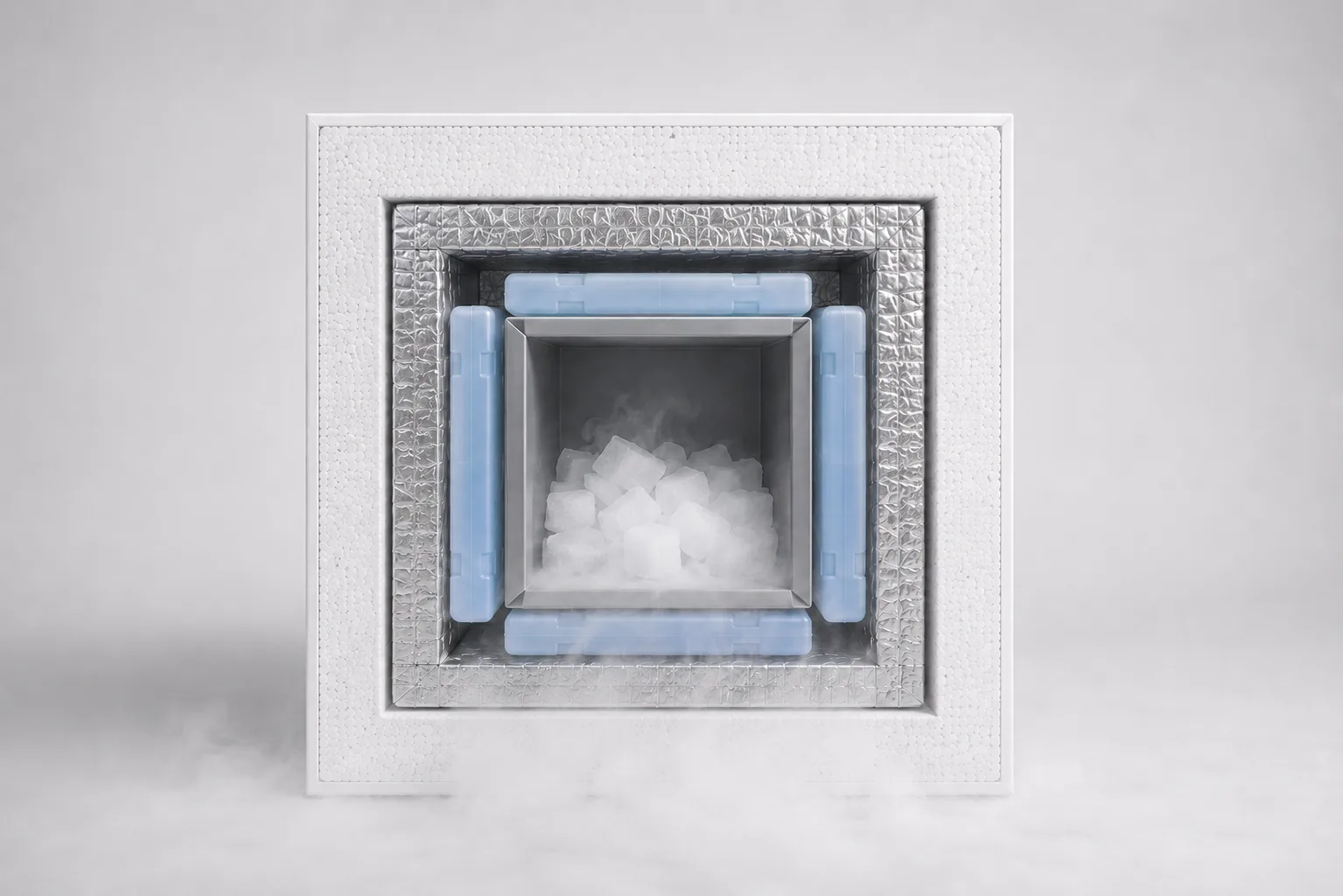
The main cause: frozen gel packs placed in direct contact with product packaging. This creates thermal shock that drops temps below -5°C, way outside the 2-8°C window for refrigerated biologics.
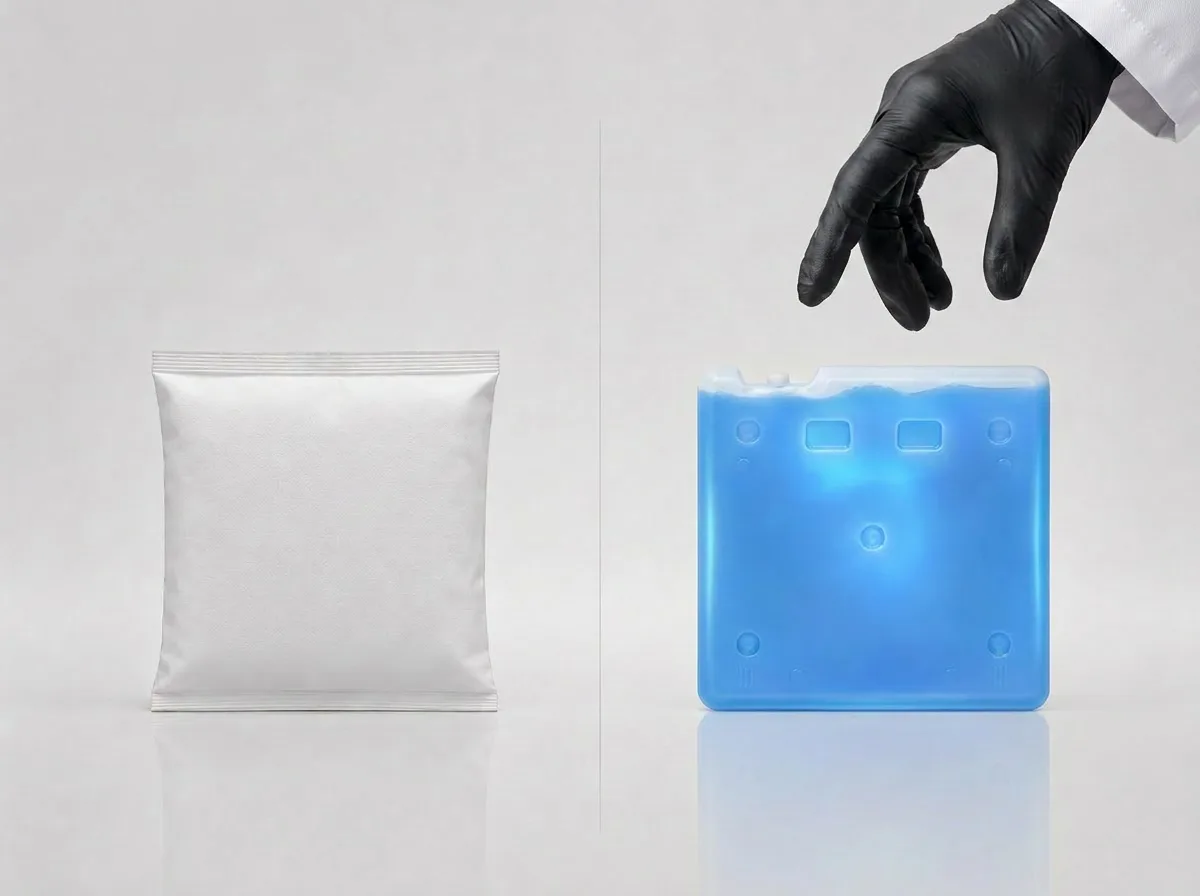
Here's why that's worse in winter: in summer, frozen gel packs warm up over time. They absorb heat, melt, transition through their phase change at 0°C, and eventually become liquid. Once they're liquid, they stop pulling heat out of your product. The system stabilizes. In winter, the external cold keeps those gel packs frozen. They never melt. They never hit that phase change. They never stop pulling heat. They just keep going until the product freezes.
Industry surveys show that 20% of shippers are completely unaware whether their shipments have experienced any temperature excursions at all.⁴ They're not checking. They don't know.
This Isn't Theoretical
COVID-19 vaccine distribution gave us unprecedented visibility into cold chain failures. In January 2021, documented incidents of vaccine shipments freezing during transit affected thousands of doses worth over a million dollars. Temperature monitoring devices caught the excursions. But only because monitoring was in place.⁵
These aren't isolated incidents. They're symptoms of a systemic problem.
What Freezing Actually Does
When a biologic freezes, ice crystals form inside the solution. Those crystals physically tear through the protein structures that make the drug work. Proteins unfold, aggregate, and clump together.
Research on TNF-α inhibitors (Humira, Enbrel, Cimzia) found that 47.6% of freeze-thaw stressed samples showed increased particle formation.⁶ Those aggregates aren't just ineffective. They can trigger the patient's immune system to develop antibodies against the medication itself.
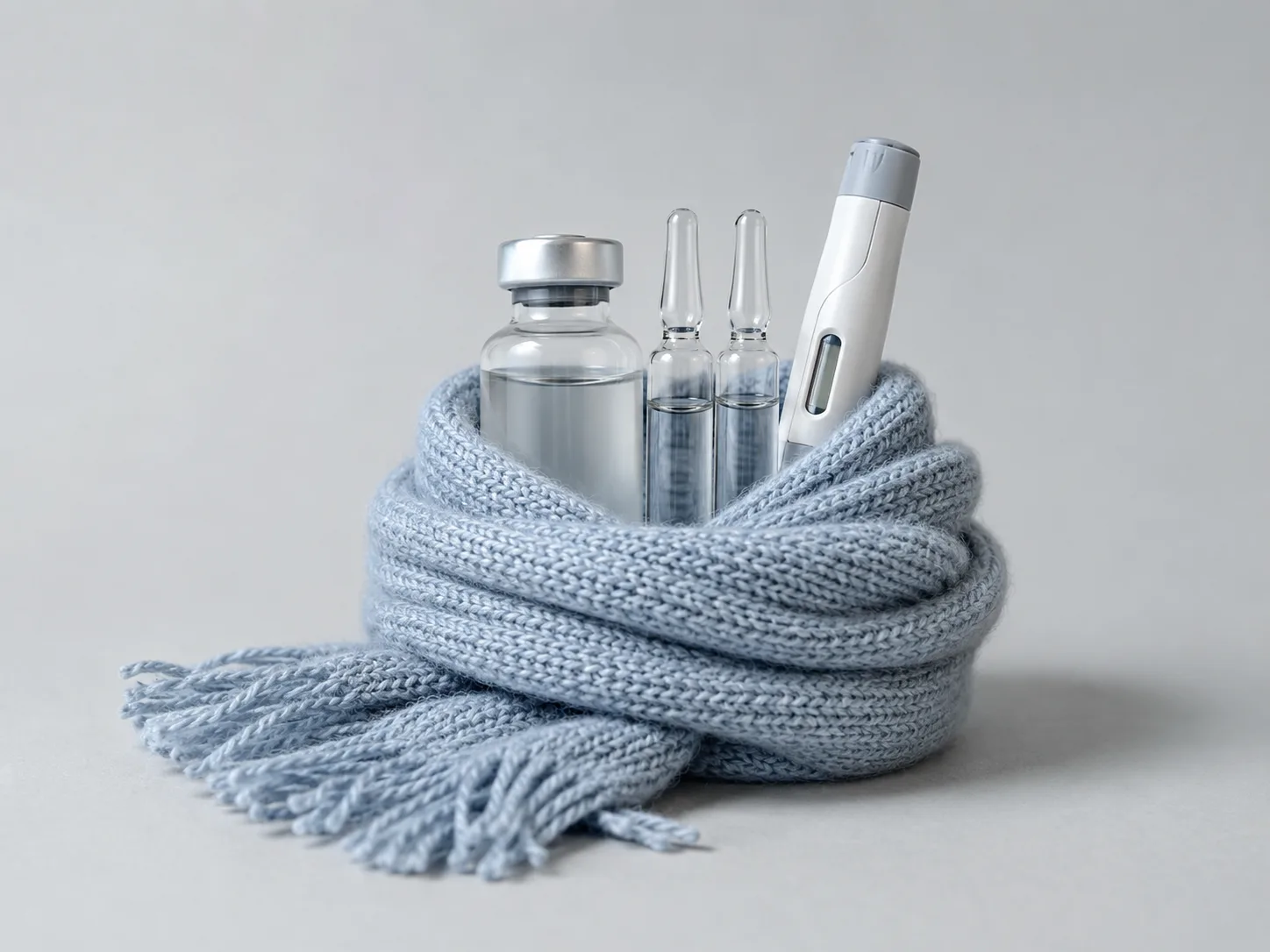
Here's what makes it dangerous: the medication often looks completely normal after thawing. Clear solution, no visible particles, pen mechanism works fine. The patient has no idea anything's wrong. But the molecular structure that lets the drug bind to receptors is compromised. With biologics, once you break that structure, it doesn't come back.
The Compounding Problem
Compounded medications face an additional challenge: they're inherently less stable than FDA-approved manufactured drugs.
FDA surveys show compounded products fail quality tests at 34%, compared to under 2% for commercial drugs. That's a 17x higher failure rate. Potency in tested samples has ranged from 67% to 268% of what the label claimed.⁷
The reasons are structural. Manufactured drugs go through years of stability testing and carry expiration dates of 2-5 years. Compounded preparations carry "beyond-use dates" measured in days or weeks. A non-preserved compounded liquid might have a 14-day window. A sterile preparation made in certain conditions might only last 12-24 hours.⁸
Compounded preparations often lack optimized preservative systems, have variable particle sizes from manual mixing, and use generic containers without compatibility testing. They're starting from a weaker position. Temperature excursions hit them harder.
Creams, Gels, and Emulsions
Freezing destroys emulsion-based products. When the water phase freezes, expanding ice crystals press oil droplets together and rupture the membrane holding the emulsion stable. Research shows that slower freezing actually causes more damage. Larger ice crystals mean more membrane rupture.
Once a cream or lotion has frozen and thawed, it typically shows complete phase separation. It can't be fixed by re-mixing. At this point, the product is rendered unusable.
Suspensions face caking. Particles aggregate into solid masses that won't resuspend even with shaking. The patient gets inconsistent dosing or no dosing at all.
Compounded GLP-1 Medications
Compounded semaglutide and tirzepatide have become a significant concern. FDA has received over 600 adverse event reports for compounded semaglutide alone as of mid-2025, with multiple recalls for sterility failures and potency problems.⁹
Peptide drugs like these can't tolerate temperature excursions the way some small-molecule drugs can. When peptides freeze, ice crystals disrupt the three-dimensional protein structure. The peptide chain unfolds and aggregates. Once that structure is broken, it doesn't refold.
If you're shipping compounded preparations, especially peptides, emulsions, or sterile products, the margin for error on temperature is even smaller than with manufactured drugs. The stability just isn't there to absorb excursions.
The Math on Degradation
Here's a number worth knowing: every 10°C temperature shift roughly doubles the degradation rate. This is the Q10 principle from the Arrhenius equation, used across pharmaceutical stability testing.¹⁰ A drug susceptible to hydrolysis that gets hit with a 20°C swing can lose up to 96% of its shelf life in that exposure window.
For products with short beyond-use dates, that math gets ugly fast.
What's at Risk by Category
Cold Chain (2°C - 8°C)
These medications require refrigeration and are destroyed by freezing. Every manufacturer listed below explicitly states: do not freeze, do not use if frozen.
GLP-1 Agonists: Ozempic, Wegovy (semaglutide), Mounjaro, Zepbound (tirzepatide), Trulicity, Victoza, Saxenda, Byetta. Peptide chains that unfold when frozen. Given the 80% DtP failure rate, significant freeze exposure should be assumed.
Insulin: Humalog, Novolog, Apidra, Lantus, Basaglar, Levemir, Tresiba. Studies show improperly stored insulin loses 14-18% potency. Frozen insulin crystallizes irreversibly.
TNF Inhibitors: Humira, Enbrel, Remicade, Cimzia, Simponi. These are the medications where research documented that 47.6% particle formation rate after freeze-thaw stress.
Vaccines: WHO estimates over 50% of global vaccine wastage comes from cold chain failures. For many vaccine types, freezing is a bigger problem than overheating.¹¹
Controlled Room Temperature (15°C - 25°C)
The "room temperature" label doesn't mean no protection needed. These products have a 15°C floor. When external temps drop below zero, that floor becomes hard to hold.
An ASHP/University of Utah study shipped 48 non-refrigerated packages to six US cities with temperature loggers. 100% of shipments experienced temperatures outside the recommended range. In winter, packages spent 68-87% of transit time outside acceptable temperatures.¹²
Thyroid medications: Synthroid, Levoxyl, Tirosint (levothyroxine). Narrow therapeutic index. Small potency changes produce clinical effects.
Cardiovascular: Lisinopril, Enalapril, Metoprolol injectable. FDA labeling includes "Protect from freezing."
Anticonvulsants: Valproic acid, Phenytoin liquid, Levetiracetam. Narrow therapeutic index. Even modest potency changes affect seizure control.
Oral Contraceptives: Manufacturers warn against temperatures below 59°F (15°C). Temperature-damaged contraceptives may show no visible changes while losing potency.
Topical Preparations: Mupirocin, Tretinoin, Diclofenac gel. Freezing causes irreversible emulsion separation.
The Three-Phase Winter Problem
Here's why winter is actually harder than summer. It's not just about the cold. It's about the swing.
Every temperature-sensitive product has a floor and a ceiling. For cold chain, it's 2°C and 8°C. For controlled room temperature, it's 15°C and 25°C. Your job is to keep the product between those numbers.
In summer, environmental temps are relatively flat. You're protecting in one direction: keeping things from getting too warm. You're defending the ceiling.
Winter swings through three distinct environments:
Packing: You're in a climate-controlled warehouse, typically around 20°C. For cold chain products, you need to pull heat out to stay below 8°C. For ambient products, you're already in range. No problem yet.
Transit: Shipment hits the real world. Trucks. Docks. Tarmacs. Sub-zero conditions. Now you're defending the floor. For cold chain, that's 2°C. For ambient, that's 15°C. External temps are pushing hard against that lower limit.
Last Mile: Shipment arrives. It sits at a pharmacy counter, a clinic, or a doorstep. Back to warmer conditions. Now you're defending the ceiling again.
The swing is warm to cold to warm. Your packaging has to handle all three. Most summer pack-outs are designed to protect in one direction. They're not configured for the winter swing.
Different Problems, Different Solutions
Each temperature category has its own physics. The solutions aren't interchangeable.
2-8°C Cold Chain: The problem is gel pack behavior. In summer, frozen gel packs absorb heat, melt, and stabilize. In winter, external cold keeps them frozen. They never stop pulling heat out of your product. The solution is refrigerant configuration: adjust the frozen-to-liquid ratio for winter. You need frozen mass during packing and last mile to defend the ceiling, but liquid mass during transit to stop defending against a ceiling threat that isn't there.
15-25°C Controlled Room Temperature: The problem is that water-based gel packs can't help. Water phases at 0°C. At your 20°C warehouse, those gel packs are already liquid. They have no thermal energy left to contribute. When transit hits sub-zero and you need something to release heat and defend the 15°C floor, they're dead weight. The solution is Phase Change Material engineered to phase near your floor temperature. PCM at 18°C starts liquid at warehouse temp. As external temps drop during transit, it solidifies and releases heat, actively protecting the payload.
2-30°C Distribution Range: Many specialty pharmacies ship products to a 2-30°C range rather than the strict 15-25°C storage range. USP 1079 explicitly states that temperature ranges for storage and transport "may be the same or different" and are "determined by the product manufacturer, based on stability data."¹³ The 30°C ceiling comes from USP 659's allowable excursion limit for controlled room temperature products.¹⁴ The 2°C floor comes from "Do not freeze" labeling, with 2°C providing a safety buffer above freezing. URAC and ACHC accreditation standards accept this approach when supported by manufacturer guidelines and packaging qualification testing.¹⁵
But that 2°C floor isn't optional. It's the entire point of freeze protection for these products. When winter transit pushes temps toward zero, you need active thermal protection to defend that floor. Don't grab your summer 2-8°C configuration. Those pack-outs are loaded with frozen mass designed to defend against heat. In winter, that frozen mass works against you. You need a winter-specific approach with less frozen refrigerant and more thermal buffering to keep products above freezing without overcooling.
If those conversations aren't happening with your packaging vendor, that's a gap worth addressing.
The Monitoring Gap
Most data loggers alarm at the high end. 8°C for cold chain, 25-30°C for ambient. Makes sense in summer when you're defending the ceiling.
In winter, of course you're not hitting 8°C. The question is whether you're breaching the floor. If you're only checking high-end alarm flags and haven't set up low-end monitoring, you're missing what matters.
Set alerts for the floor, not just the ceiling. Look at the full temperature curve. Run winter-specific qualification tests through your worst-case lanes in partnership with your cold chain vendor.
Bottom Line
Winter 2025-2026 started early and it's running cold. If you haven't revisited your pack-out strategy for freeze protection, the data says you should.
80% of winter transit time outside recommended temps. 80% of direct-to-patient shipments failing temperature control. 100% of non-refrigerated packages experiencing excursions. 38+ hours below freezing on a routine domestic shipment. Compounded preparations with 34% quality failure rates and beyond-use dates measured in days. Emulsions that can't be fixed once frozen.
The patient getting your shipment doesn't know if their medication froze in transit. The pen looks fine. The cream looks normal. But if the structure is compromised, the therapy isn't working the way it should. They'll spend weeks wondering why before anyone thinks to question the supply chain.
Patients trust you to get their medication to them safely. You trust cold chain packaging manufacturers like TempAid to give you the tools to do that. The tools exist. Winter-specific pack-outs, adjusted refrigerant ratios, PCM for ambient protection. The options are here. Neglecting to protect your patients' therapy from freeze damage isn't a logistics problem. It's a choice.
Questions about your winter strategy? Let's talk.
Sources
1. Chowdhury DA, et al. Evaluation of temperature excursions from USP recommendations during mail transit. Journal of the American Pharmacists Association. 2023;63(3):847-852.
2. NBC News. Millions of Americans receive drugs by mail. But are they safe? (2020-2021).
3. Sensitech BioMed. Biologic Medications and the Specialty Pharmacy: Direct-to-Patient Temperature Study.
4. Cold Chain IQ. Industry temperature deviation survey.
5. State health department COVID-19 vaccine incident reports (January 2021).
6. Vlieland ND, et al. The Impact of Inadequate Temperature Storage Conditions on Aggregate and Particle Formation in Drugs Containing TNF-Alpha Inhibitors. Pharmaceutical Research. 2018;35(2):42.
7. FDA. Limited FDA Survey of Compounded Drug Products (2001, 2006).
8. USP Chapters 795, 797. Pharmaceutical Compounding Standards.
9. FDA. Compounded semaglutide and tirzepatide adverse event reports and safety communications (2024-2025).
10. ASTM F1980. Standard Guide for Accelerated Aging of Sterile Barrier Systems. Q10 coefficient and Arrhenius equation for pharmaceutical stability.
11. World Health Organization. Vaccine cold chain guidelines.
12. Bishara RH, et al. Temperature excursions in mail-order prescriptions during shipment. ASHP/University of Utah (2020).
#ColdChainLogistics #FreezeProtection #PharmaSupplyChain #WinterShipping #TemperatureControl #GLP1 #SpecialtyPharmacy #DirectToPatient #PCM #PhaseChangeMaterials #Compounding #MedicationSafety #PatientSafety #Biologics